B1C4
Impermanence
One of the downsides of writing the way I do is that my work is a lot more ephemeral than other books. Other books, once printed on paper, don't change. If you buy a book today, your grandkids will be able to read it.
The same is not true for my work. My book works with today's programming languages on today's web browsers, but who knows what my grandkids' programming languages and web browsers will look like. Hell, who even knows how big future screens will be? I thought a lot about phone screen sizes when writing my book, but it's possible that in the future, everyone will read through virtual reality helmets that are 5031 x 867 pixels large. In any case, my book will not look the same in the future.
I'm fine with this. Writing online the way I do gives me a lot of flexibility, and I think the downside of impermanence is not as bad as it seems.
Everything is impermanent
There is a part in the Three Body Problem trilogy where characters want to leave a message for future generations. Despite the fact that the characters belong to a technologically advanced species, they decide that the best way to leave a long-lasting message is to literally carve it into a big rock.
Big rock carvings last; everything else passes.
I don't have the money, time, or muscles to carve my book into a big rock. Everything else is varying small degrees of impermanence. My website might last 50 years, and a book might last 500, but in the grand scheme of human existence, which I hope continues for more than 5,000,000,000 years, those are all mere blips.
Everything is impermanent
Books degrade not only because the surface they're written on degrades, but also because the language and culture they're written in changes. I could write my book on the world's most indestructible surface, and it would still become obsolete with time.
Consider, for example, that there is a cottage industry of books that translate old English into modern English.
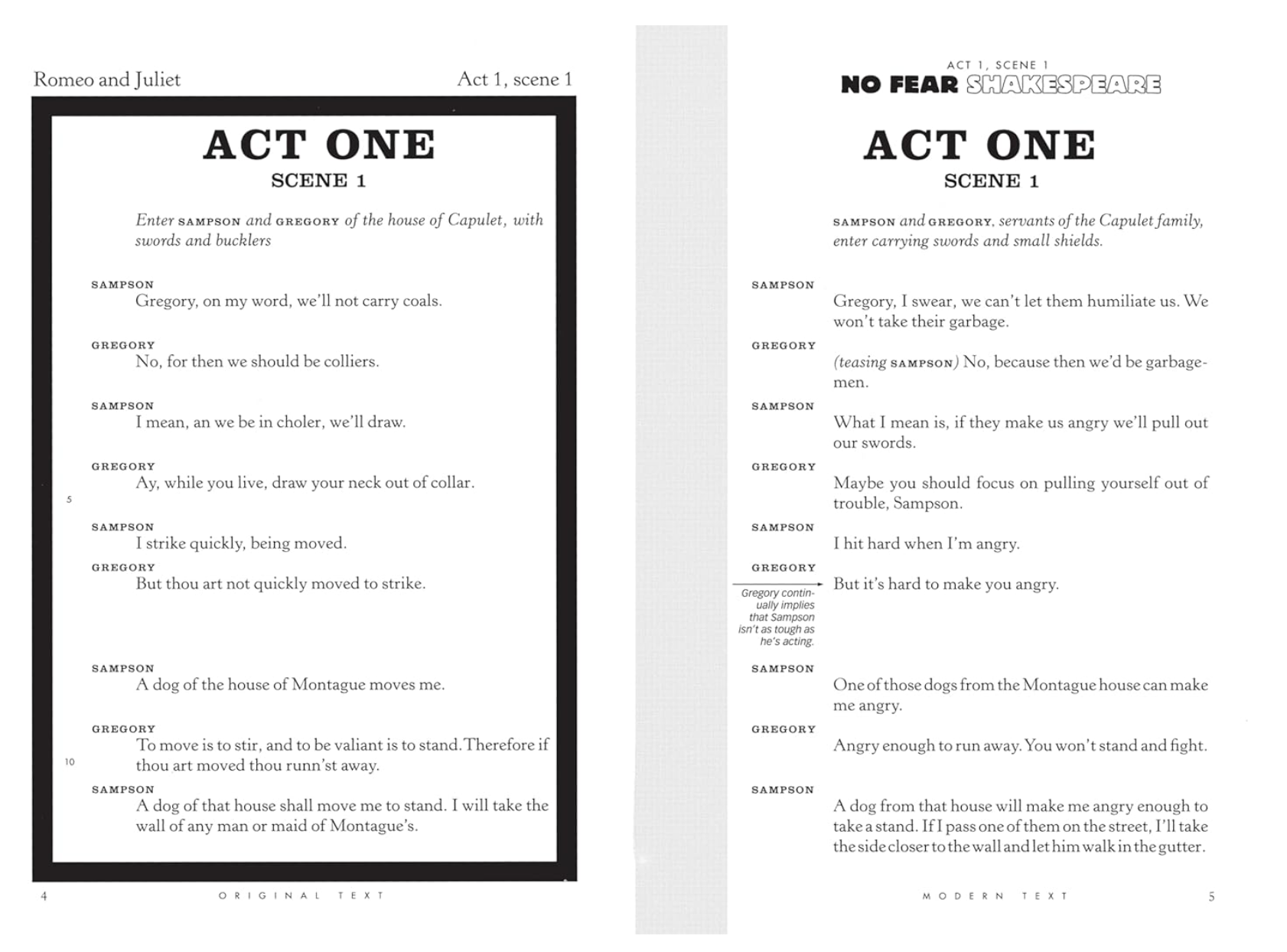
Even though old English has most of the same words as modern English, it is hard to understand. Same for the culture. In the above Shakespeare scene, things like "servants carrying swords" and "families having a generations-long rivalry" are perfectly normal plot points. Except that, these days, they're not.
Writing on paper wouldn't save the contents of my book from becoming outdated.
Everything is impermanent
It is fitting for a book about death and immortality to ask meta-textual questions about its own death, purpose, and immortality.
How long will my book last before it dies and can no longer be read?
Staying up late every night to write this book is hastening my own death; is it worth it?
Will this book achieve the rare trick of becoming immortal?
Any book that becomes immortal does so not because of how it was originally written, but because of who it inspired love in. Maybe someone will read my book who loves it so much that he'll transform it into a form that will last another 30 years. And in the next generation, it may find another reader who helps it live for another 30. And so on, generation by generation, my story may go on, the same way we've all received our old stories and new bodies, gifted to us by a chain of people who loved something enough to breathe some of their own life into it.